Building dungeons, wall by wall
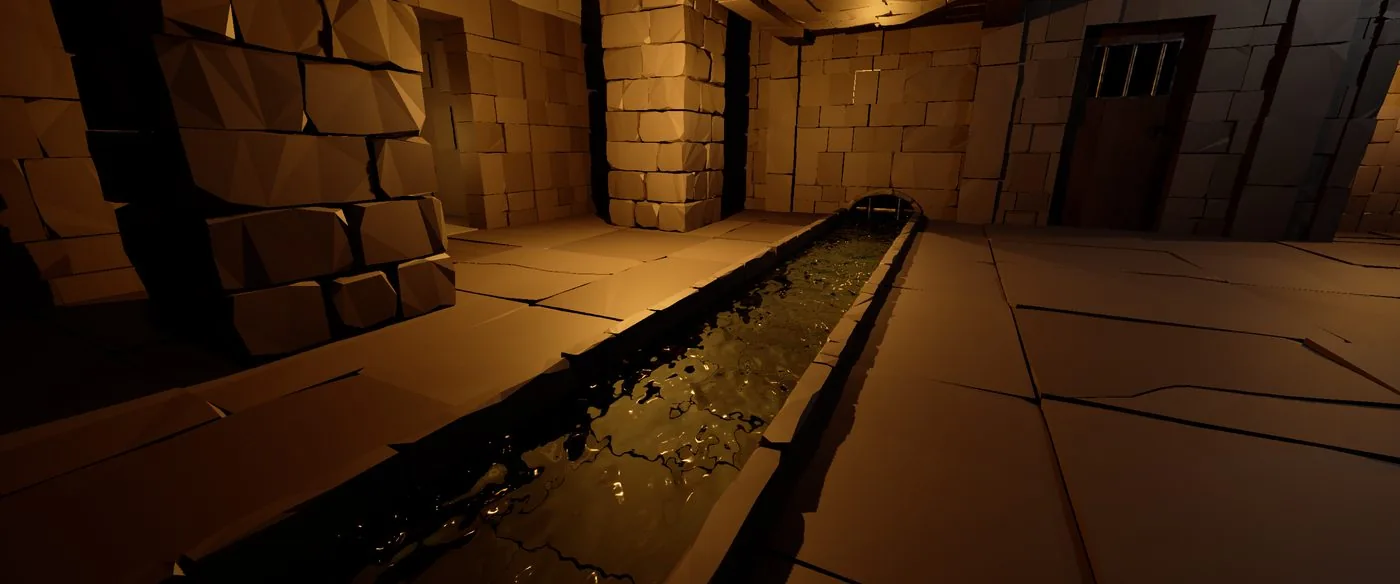
No grid, just pieces that lock into one another, and a small trick: the ruins you explore are made of the very same pieces you'll build your base with.
Devlog #03, and this time we're heading underground! Eldoria has places you'll descend into: old, dark, not exactly welcoming at first glance. And for each of them, one simple question: how do you build a dungeon without building every room, every corner, by hand? The answer is a construction set: the modular kit.
Same brick, three states
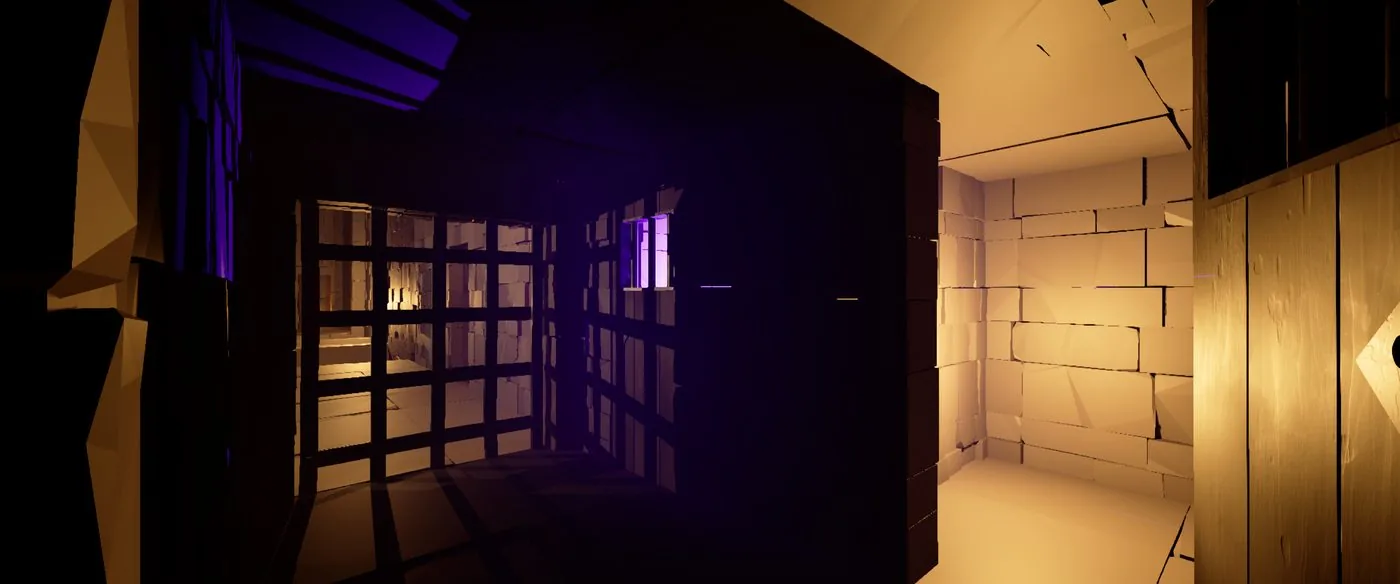
That's where it gets really interesting. Every piece comes in several flavours: intact, damaged, and ruined. Clean and cared-for, cracked and worn, or half-collapsed with vegetation growing through it. So the same kit can give you a pristine hall or a crumbling ruin.
Kit pieces with a role to play
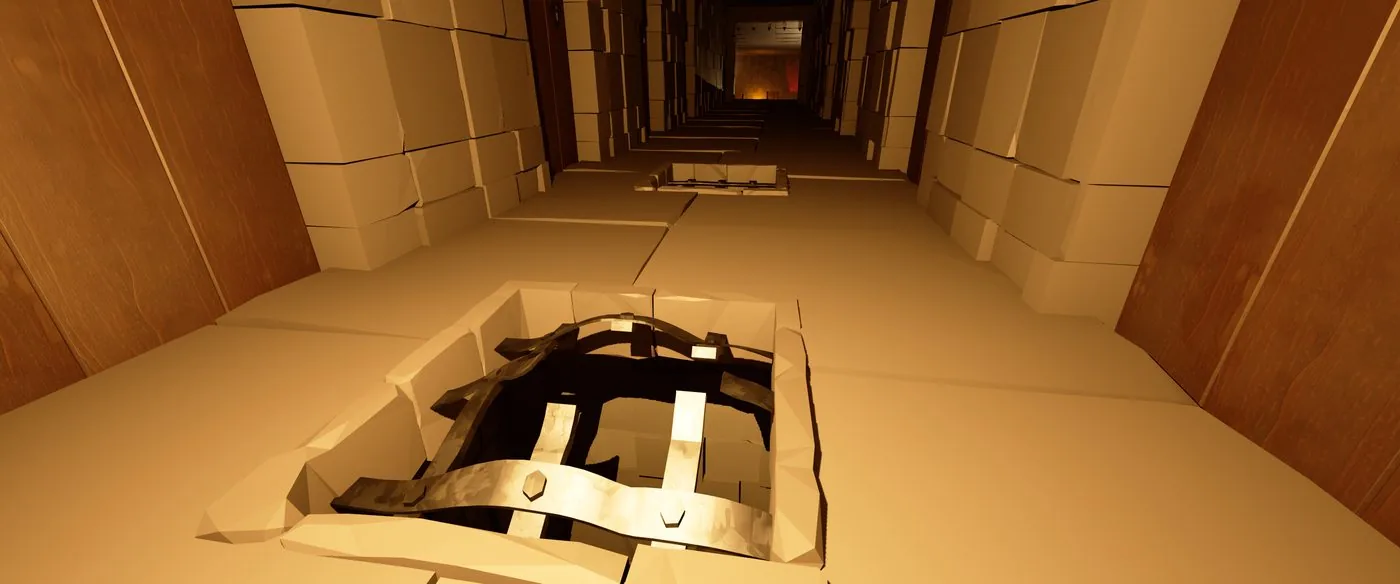
Not every piece is just there to look pretty! Doors open, torches actually light the room, gates open and close, and every now and then a trapdoor opens under your feet (sorry in advance). They're part of the kit too, as self-contained pieces that take part in the gameplay: you can drop a working door or a trap exactly the way you drop a wall. It's all scripted ahead of time in Blueprint inside Unreal Engine.
And the best part: you'll build with them too
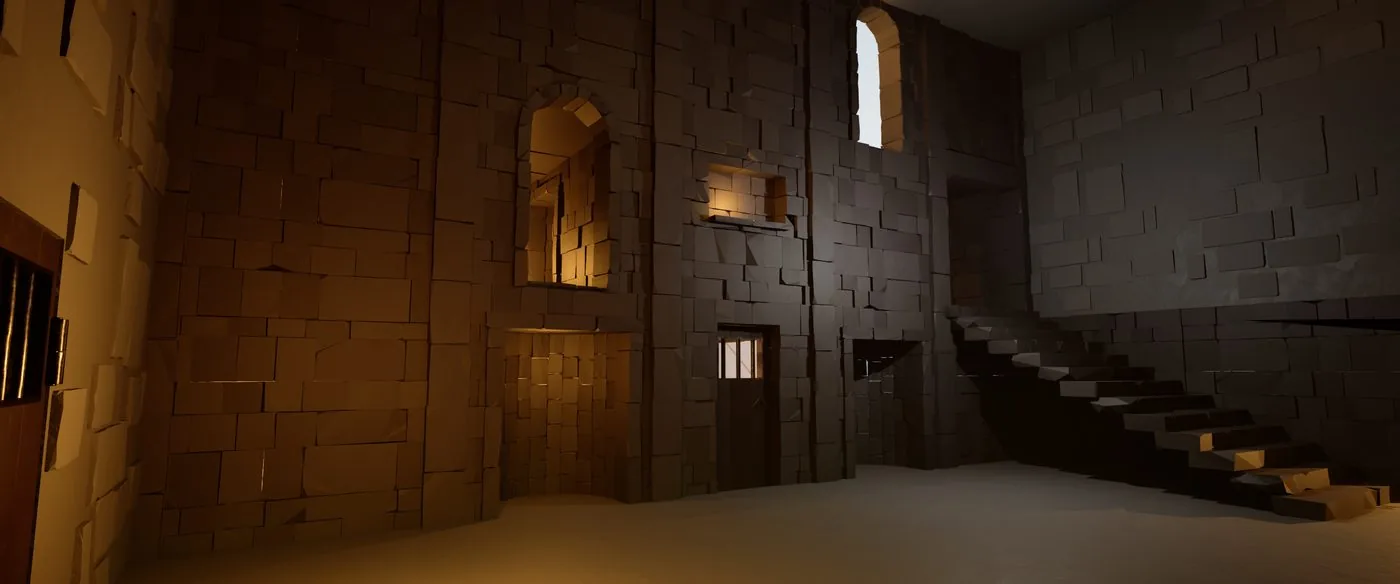
This is the part we really care about for this game. The kit we use to build the ruins you explore is the same one you'll build your own base with. Walk through a collapsed hall, spot a column or a stretch of wall you recognise, then go and build your own. Of course, it won't be that simple… you'll have to get hold of the pieces first. Exploring and building stop being two separate things.
Why build it this way?
Three reasons, really:
Speed: a small team can dress a whole space in an afternoon, then move the walls around until it serves the gameplay and the story perfectly.
Consistency: one kit, one visual language. Wherever you go, it's the same world, built by the same seasoned hands of the team's modelling experts.
Performance: repeating and reusing the same pieces lets the engine batch them together, so a big, detailed space stays cheap to draw — that's the magic of optimisation. It's the same instancing trick behind the lake tiles in our water system, and it's a big part of why the game stays smooth, even on modest hardware.
What's next
From here, two roads. The first is dressing: props, light, sound, the little touches that turn a modular kit of rooms into somewhere you'd think twice before entering. The second is handing the kit to you: getting the build system to the point where you can snap these same pieces together and make the place your own.
And that's a wrap on #03! Mind the trapdoors, though…
More devlogs
What would you build?
Swing by the Discord and tell us! A cosy little hideout, a lethal trap-filled dungeon, an endless tower made mostly of stairs? We read and study everything, and the good ideas have a nasty habit of sneaking into the game!